
The Sociocultural, Psychological, and Relational Dynamics of “Male Wives”: Dominant Professional Women and Their Permanently Feminized, Enslaved Male Partners
Explore the complex dynamics of dominant professional women seeking permanently feminized, enslaved male partners—where 1950s housewife ideals collide with modern power exchange, fetish, and gender role subversion.

Introduction
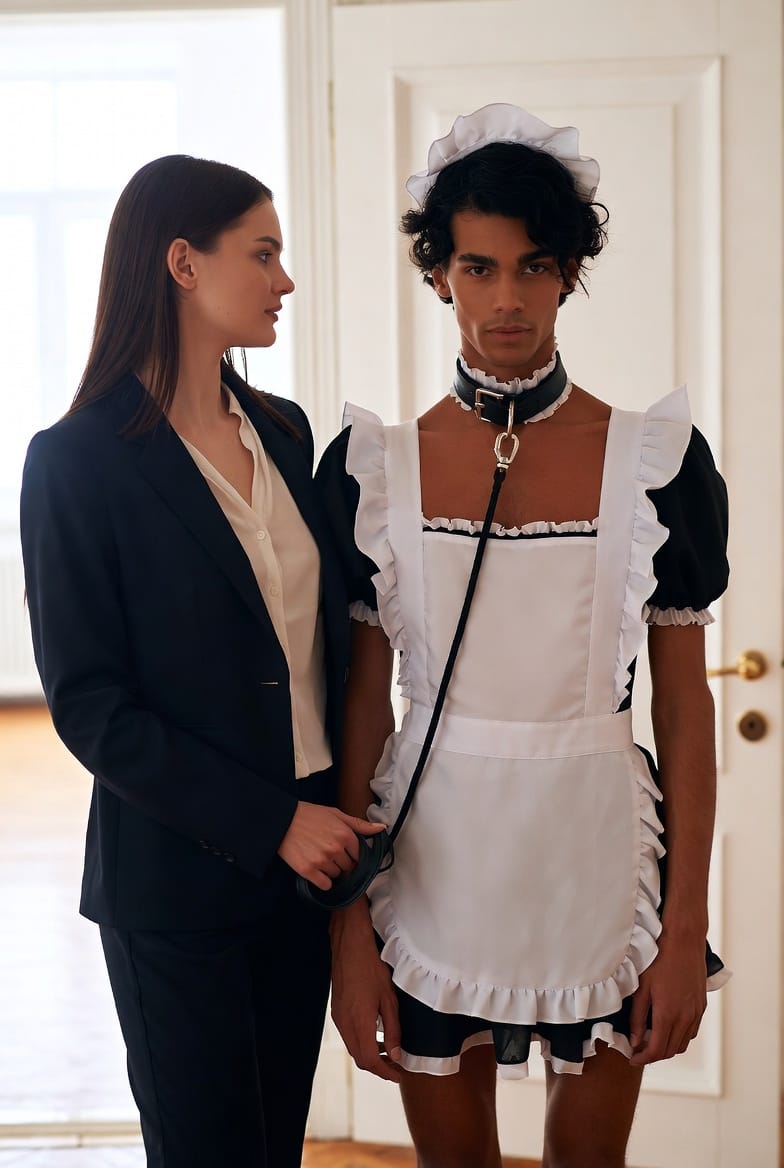
In contemporary society, the traditional gender roles of the 1950s—where men were breadwinners and women homemakers—have been increasingly challenged and redefined. Amidst this evolution, a niche phenomenon has emerged: dominant professional women who seek male partners willing to adopt an extreme form of the 1950s housewife role—permanently feminized, enslaved, and objectified as domestic and sexual servants. This article explores the multifaceted dynamics of these relationships, which we term “male wives,” through historical, psychological, sociological, and relational lenses. By synthesizing academic research, cultural analysis, and firsthand accounts, this investigation aims to provide a nuanced, interdisciplinary understanding of why these relationships exist, how they function, and what they reveal about gender, power, and desire in the 21st century.
Historical Roots: From 1950s Housewives to Modern Gender Role Subversion
The ideal of the 1950s housewife, epitomized by the post-WWII American suburban homemaker, was a cultural construct that reinforced women’s roles as nurturing, domestic caregivers. This ideal was heavily promoted through media, education, and social policy, creating a societal expectation that women’s fulfillment lay in marriage, motherhood, and homemaking. The 1950s housewife ideal was also racially and class-specific, primarily targeting white, middle-class women who could afford to stay home. This exclusivity reinforced social hierarchies and limited the agency of women outside these demographics. The ideal’s emphasis on female submission and male dominance created a rigid gender binary that has been increasingly challenged by feminist movements and queer theory.
In parallel, historical precedents for gender role reversal and power exchange exist across cultures. Ancient and pre-modern societies recognized gender nonconformity and role inversion, such as two-spirit traditions in Indigenous cultures and hijra communities in South Asia. The 19th and 20th centuries saw gender rebellions, including cross-dressing and butch/femme dynamics in lesbian communities, as well as the rise of BDSM subcultures that explored dominance and submission.
The modern phenomenon of “male wives” can be understood as both a subversion and a repurposing of the 1950s housewife ideal. It inverts the traditional power dynamic by placing the woman in the dominant role and the man in the submissive, feminized role, often taken to an extreme of permanent enslavement and objectification. This inversion is influenced by contemporary media, feminist backlash, and economic shifts where women increasingly out-earn men.
The Psychology of Power: Dominance, Submission, and the Appeal of Permanent Feminization
At the core of these relationships is the psychology of power exchange. Dominance and submission dynamics are well-documented in BDSM literature, where consensual power imbalances provide psychological and sexual gratification. Studies show that individuals may crave extreme power imbalances as a form of escapism, stress relief, or identity exploration.
For dominant professional women, the appeal of a permanently feminized, enslaved male partner can stem from multiple psychological factors:
- Power and Control: The ability to exert authority over another person’s identity and behavior can be deeply satisfying, especially for women who experience high stress or limited agency in their professional lives.
- Emotional Fulfillment: The structure and guidance provided in these relationships can create a sense of stability and mutual respect, enhancing emotional well-being.
- Trauma Processing: Some dominant women may have histories of trauma or emasculation that they address through controlled power dynamics.
Submissive men, meanwhile, may seek permanent feminization as a form of:
- Escape from Masculine Expectations: Societal pressures to conform to traditional masculinity can create psychological distress; adopting a feminine role can provide relief and a sense of freedom.
- Fetishistic Arousal: The humiliation and vulnerability associated with forced feminization can be sexually stimulating.
- Gender Identity Exploration: For some, permanent feminization may reflect a deeper gender dysphoria or fluidity, allowing them to explore their identity in a safe, controlled environment.
Attachment theory suggests that these relationships can map onto secure or insecure attachment styles, with the dynamics of power exchange providing a structured environment for emotional connection and vulnerability.
Societal Mirrors: Feminist, Queer, and Class Perspectives on Male Wives
The phenomenon of male wives raises important questions about agency, consent, and the reinforcement or subversion of patriarchal norms. Feminist scholars debate whether these relationships empower women or replicate oppressive structures by inverting them. Queer theory frames these relationships as performances that challenge traditional gender binaries and power structures. By inverting the dominant/submissive roles, male wives can be seen as a form of queer resistance or parody, destabilizing normative gender expectations.
Class and labor dynamics also play a role. The 1950s housewife ideal was a luxury of middle-class white families, and today, the ability to maintain a non-working, submissive partner is often a privilege of high-earning women. This economic reality intersects with the fantasy of domestic servitude, raising questions about exploitation and power imbalances.
Race and colonialism add further complexity. The 1950s housewife ideal was racially exclusionary, and the fantasy of enslavement risks evoking historical racialized servitude. Practitioners must navigate these associations carefully to avoid perpetuating harmful stereotypes.
The Reality of the Lifestyle: Logistics, Modifications, and Daily Life
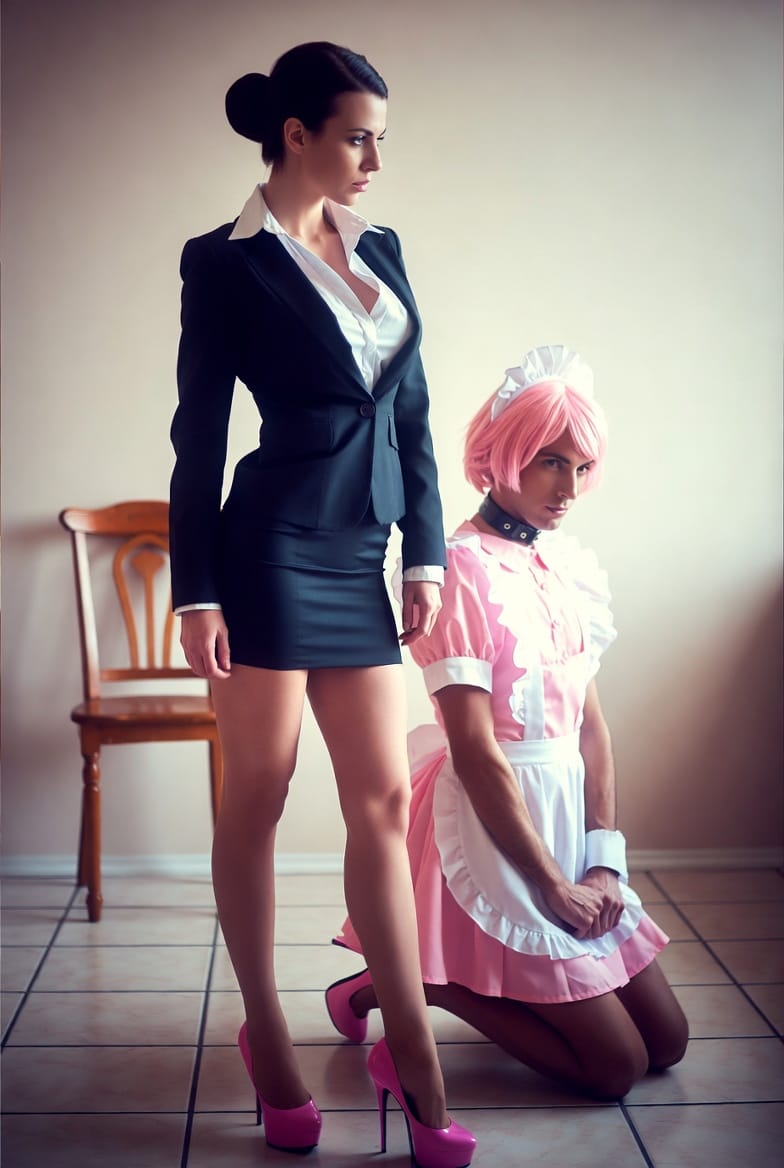
The logistics of maintaining a permanently feminized, enslaved male partner involve multiple dimensions:
- Legal and Financial Structures: Couples may formalize power exchange through contracts, legal agreements, or financial domination arrangements. These formalizations help define roles, responsibilities, and boundaries.
- Medical and Bodily Modifications: Permanent feminization often includes hormone therapy, breast implants, genital nullification, or castration. These interventions carry medical risks and ethical debates about body integrity and consent.
- Domestic Labor: The male wife typically performs traditional domestic duties—cooking, cleaning, childcare—often in a highly ritualized and submissive manner. This labor can be both a form of service and a source of identity and purpose.
- Social Isolation: Many submissive partners report cutting ties with unsupportive friends and family, which can lead to mental health challenges. Online communities and support networks provide crucial social support.
Sex and Intimacy: Objectification, Dehumanization, and Love
The sexual and romantic components of these relationships are complex:
- Objectification and Dehumanization: The male wife may be treated as a living doll or pet, with the dominant woman exerting control over his body and sexuality. This objectification can be a source of both erotic pleasure and psychological tension.
- Sexual Practices: Common activities include chastity, orgasm control, and “human furniture” roles. These practices are often negotiated within the bounds of consensual BDSM but raise questions about the line between fantasy and abuse.
- Love vs. Ownership: Despite the power imbalance, many couples report genuine affection and emotional connection. The dominant woman may experience love and care for her submissive partner, while the submissive man may find fulfillment in his role.
Community and Stigma: Online Spaces, Real-World Networks, and Backlash
The male wife phenomenon exists within a broader subculture of BDSM and female-led relationships:
- Online Platforms: Websites and forums facilitate discussion, connection, and support among practitioners. These spaces allow for the sharing of experiences, advice, and fantasies.
- Real-World Networks: Events such as DomCon and Fetish Week London provide opportunities for couples to meet, socialize, and engage in community-building activities.
- Backlash and Stigma: These relationships often face judgment from vanilla society, TERFs, and even mainstream BDSM communities. Media portrayals can sensationalize or misrepresent the dynamics, contributing to stigma.
Ethics and Controversies: Consent, Coercion, and Legal Gray Areas
Ethical considerations are paramount:
- Consent and Coercion: The line between consensual kink and abuse is a critical issue. The “SSC” and “RACK” frameworks guide practitioners in negotiating boundaries and safety.
- Non-Consensual Fantasies: Some roleplay scenarios involve “forced feminization,” which must be carefully distinguished from real-world coercion. Psychological research highlights the importance of consent and mutual agreement in these fantasies.
- Legal Risks: Extreme power exchange can cross into criminal territory, with potential prosecution for domestic abuse or human trafficking. Historical cases illustrate these risks.
Personal Narratives: Motivations and Experiences
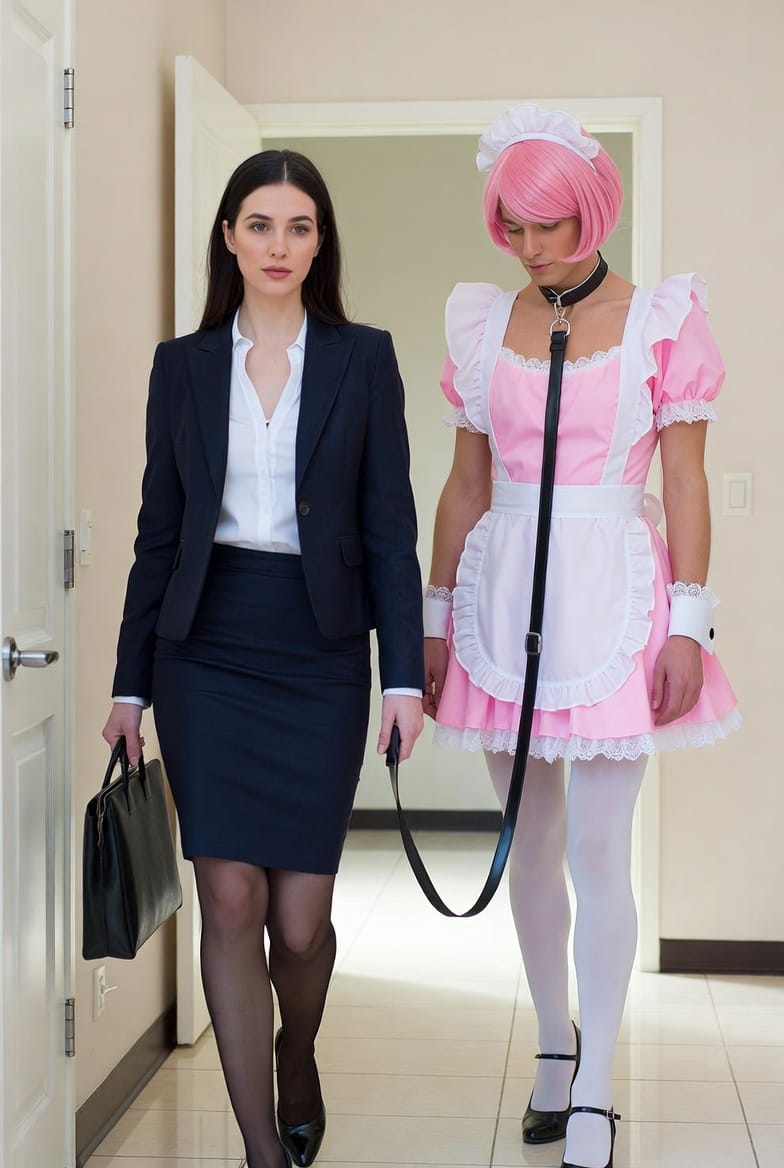
Firsthand accounts reveal diverse motivations:
- Dominant Women: Many seek power, control, and emotional fulfillment. Some enjoy the aesthetic and erotic appeal of feminized men, while others find satisfaction in the structure and service provided by their submissive partners.
- Submissive Men: Motivations range from escape from masculine expectations to fetishistic arousal and gender identity exploration. The experience of permanent feminization can provide psychological relief and a sense of belonging.
Critiques and Counterarguments
- Feminist Critiques: Some feminists argue that these relationships replicate patriarchal oppression by inverting it, potentially reinforcing misogyny and gender stereotypes.
- Conservative Critiques: Conservatives may view these dynamics as undermining traditional values and gender roles.
- Kink Community Critiques: There is debate within BDSM communities about whether these dynamics give BDSM a bad name by blurring lines with abuse.
- Trans Community Critiques: Some trans individuals argue that feminization fetishizes womanhood and trivializes the experiences of transgender women.
Future Trends
- Growth of the Niche: As gender norms evolve, the male wife phenomenon may grow, potentially influenced by AI, sex robots, and changing labor markets.
- Legal and Social Shifts: Potential legal restrictions on extreme power exchange and feminization kink could emerge, influenced by broader societal debates about gender and consent.
- Cultural Acceptance: Increased visibility and normalization of diverse gender expressions may lead to greater acceptance or backlash.
Summary Table: Traditional 1950s Marriage vs. Male Wife Dynamics
| Aspect | Traditional 1950s Marriage | Male Wife Dynamics |
|---|---|---|
| Gender Roles | Male breadwinner, female homemaker | Female dominant, male submissive/homemaker |
| Power Structure | Male dominance, female submission | Female dominance, male submission |
| Economic Dependency | Female dependent on male income | Male dependent on female income |
| Social Status | Male authority, female nurturer | Female authority, male nurturer/subservient |
| Sexual Dynamics | Male active, female passive | Female dominant, male submissive |
| Legal and Social Recognition | Legally and socially sanctioned | Often stigmatized, legally ambiguous |
| Psychological Motivations | Social conformity, gender norms | Power exchange, fetish, identity exploration |
Conclusion
The phenomenon of dominant professional women seeking permanently feminized, enslaved male partners is a complex, multifaceted phenomenon that reflects evolving gender roles, psychological desires, and sociocultural shifts. Rooted in historical gender ideals and influenced by contemporary feminist and queer discourse, these relationships challenge traditional power structures while also raising ethical and legal questions. The psychological motivations of both dominant women and submissive men reveal a nuanced interplay of power, identity, and emotional fulfillment. Sociologically, these relationships navigate and sometimes subvert patriarchal norms, but also risk reinforcing them through inversion. The logistics of permanent feminization involve significant lifestyle changes, medical interventions, and social isolation, underscoring the depth of commitment and the potential for both personal growth and harm. As societal attitudes toward gender and power continue to evolve, the male wife phenomenon invites further scholarly inquiry and public dialogue about the boundaries of consent, the fluidity of gender, and the dynamics of power in intimate relationships.
1. Real Slave Training: Sissy Ass Kisser
This clip embodies the ritualized domestication of a submissive man into a feminized household servant. Step-Mommy Sugar transforms her sissy into a French maid, complete with a PVC dress, locking heels, and a posture collar, reducing him to a functional object—a footrest, makeup stool, and decorative pet. The scene captures the essence of enforced feminization as a daily practice, where the submissive’s identity is erased and replaced with the obedient, decorative role of a 1950s-inspired "male wife." The commands to perform a catwalk and serve as furniture underscore the totality of his submission and the Dominant’s absolute authority over his body and movements.
2. Sissy Pussy Superhighway
Empress Lychee’s training session pushes the boundaries of physical and psychological transformation, suspending her sissy in lingerie and chastity while subjecting him to anal dilation with long chrome dilators. The clip highlights the irreversible reshaping of the submissive’s body, framing him as a sexual commodity whose purpose is to generate income for his Owner. The use of restraints, hoods, and ritualized humiliation illustrates the extreme lengths to which dominant women go to ensure their sissies are permanently feminized, both in body and mind, and fully integrated into a life of service and objectification.
3. Cum-Eating Sissy Cuckold
In this scenario, Mistress Nova—seven months pregnant—enslaves her ex-boyfriend as a sissy maid and nanny, dressing him in a pink baby dress, bonnet, and pacifier. The clip explores the intersection of cuckoldry, infantilization, and domestic servitude, as the sissy is not only feminized but also tasked with caring for his Dominant’s child. The humiliation of being reduced to a "baby girl" and cumdump reinforces his total submission, mirroring the self-sacrificing, nurturing role of a 1950s housewife, but twisted into a dark parody of traditional gender roles. The dynamic blurs the lines between kink and lifestyle, showcasing how these relationships can extend into real-world responsibilities and power structures.