
Trampling and Human Furniture: Advanced Foot Domination (Part III)
The third chapter in DominaPlanet’s Foot Worship Series explores trampling, stomping, and human furniture—where Her feet become the throne of power and His surrender is complete. History, psychology, and ritual underfoot revealed.

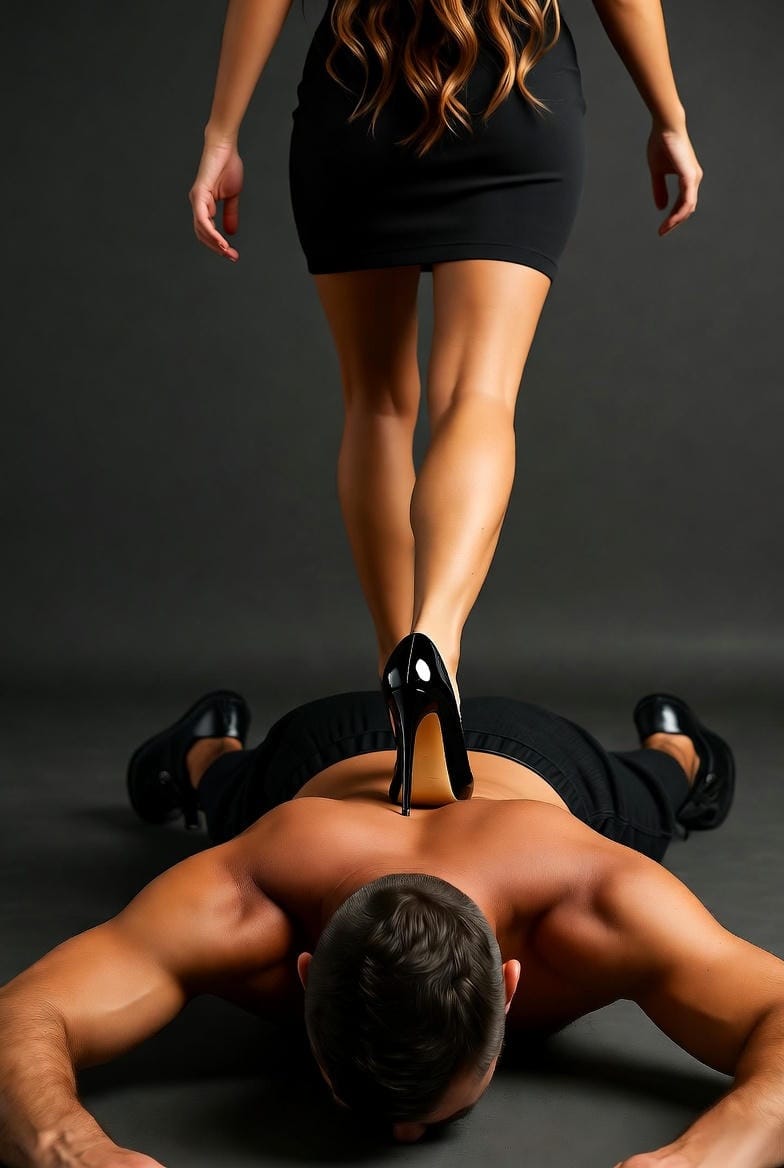
In the previous installments of our Foot Worship series, we explored the foundations of foot-focused Femdom – from sensory rituals like massage and worship to the evolving psychology of foot worship itself. Part I introduced readers to the basics of foot admiration and care within a power exchange context, while Part II examined more complex forms of service and devotion through foot pampering. Now, in Part III, we delve deeper into foot-centric domination: the art and history of trampling and human furniture. We trace this practice’s lineage through Japanese onna-sado tradition, European fetish culture, and the rise of professional dominatrices in late-20th-century America. We also unpack the psychobiology of submission underfoot – how stress and pleasure intertwine in the sub’s brain – and analyze the symbolism of kneeling and being trod upon in myth and art. Throughout, we draw on classic Femdom literature and DominaPlanet’s own scene catalog to illustrate how servitude and ritual humiliation are ritualized under Her feet.
Historical Lineage of Foot Domination
Foot-centric domination is far from a modern invention. Its roots run through diverse cultures and eras, each lending a unique flavor to the act of submitting underfoot.
Japanese Onna-Sado Traditions. In Japan, the concept of a powerful woman (sometimes called onna-sado, literally “female sadist”) commanding a man to the ground has ancient echoes. Classical folklore – for example, stories of the goddess Inanna or Shakti mythology – sometimes depict mortals humbled at the feet of divine or semi-divine women. One famous tale, the Medieval legend of Aristotle and Phyllis, even shows the great philosopher brought “to a lowly position” by a woman’s command: according to the story, Phyllis forces Aristotle to “come to my chamber crawling on hand and foot” and rides him like a horse. This image – a man on all fours at a woman’s feet – became a common Renaissance theme in erotic art. In modern Japan, onna-sado subculture and erotic art (notably by artists like Namio Harukawa) extend this theme explicitly: Harukawa’s famous prints often show voluptuous women dominating and using men as human furniture, visually asserting the woman’s absolute power. While direct citations on onna-sado history are scarce in scholarly sources, it is well documented that foot fetish and worship have long coexisted with Japanese erotic traditions, from The Tale of Genji’s occasional emphasis on delicate feet to contemporary anime and manga that celebrate domination. In short, Japan’s cultural legacy of powerful feminine icons and ritual foot service runs deep, influencing today’s onna-sado fetish communities and professional dominatrixes.
European Boot and Foot Worship Clubs. In Europe, foot dominance often intertwined with the rise of fetish clubs and BDSM subcultures. By the Victorian era, literature hinted at erotic fascination with boots and stockings. During the early 20th century, leather-clad dominatrix imagery solidified in underground circles: boots became a sign of empowerment and boot worship became a common subcultural practice among sadomasochists and related fetishists in the early 20th century. Clubs and private fetish groups in cities like London, Berlin, and Amsterdam would host bootblacking and foot-worship events, in which submissive men massaged and licked women’s feet and heels as ceremony. These European leather and fetish fairs established many tropes that persist today: thigh-high stiletto boots as status symbols of dominance, ceremonial foot-kissing in group scenes, and even structured training of foot slaves. By the 1970s and 80s, dominatrixes like Theresa Berkley (famous for her “Berkley Horse” apparatus) had become legendary in British circles, while the Continent saw organized sm and fetish unions where foot and boot worship were central rituals. Although detailed academic histories are limited, fetish historians and photographers have documented how Europe’s BDSM community preserved these traditions – boots, corsetry, and foot worship – through the late 20th century.
U.S. Pro-Domme Circles (1980s–2000s). In the United States, the 1980s brought a boom of professional dominatrices and fetish studios, many inspired by European models. These Dommes often had a foot-first approach: foot worship was an easy entry fetish for new submissives, so it featured prominently in ads and session offerings. In Los Angeles and New York, famous dominatrices like Mistress Doreen and Monique Von Cleef in the 1960s–70s ran “Houses of Pain” where foot worship was nightly fare. By the 1980s and 90s, the internet-age Dommes offered virtual mentoring on foot training. Texts like Owning and Training a Male Slave (Ingrid Bellemare, 1997) codified this era’s ideology in detail. Also by the 1990s, foot domination had become so ingrained that it entered pop culture: mainstream movies and music referenced damsels dominating men with boots and feet. Throughout American Domme circles from the 1980s onward, foot worship was both a reliable service and a symbol of ultimate surrender – the submissive content to kneel, lick, or even endure weight on the Mistress’s soles. While rigorous citations for 1980s fetish clubs are sparse, the chronology is borne out by fetish documentaries, BDSM memoirs, and the continued presence of foot-themed sessions on sites like DominaPlanet.

Psychology & Physiology of Submission Underfoot
Why do some people find utter humiliation and pain under a foot so erotic? The submissive’s experience involves a complex cocktail of psychology and neurochemistry.
Stress and Endorphins. Studies of BDSM play confirm that pain and pleasure share pathways in the brain. When a submissive is trampled or forced into subservience, the body’s stress response (cortisol, adrenaline) is triggered. This acute stress is followed by an endogenous opioid (endorphin) surge that dulls pain and often produces euphoria. In other words, enduring pressure or mild pain under a Mistress’s feet can literally flood the brain with morphine-like endorphins, which in turn activate dopamine reward circuits. Clinically, researchers note that protracted but survivable pain (like spanking or pressured stomping) causes endorphins to spike and there is an innate rewarding component to both pleasurable and painful experiences. In practical terms, a trampling scene initially flusters the sub, then washes them with a powerful cocktail of endorphins, dopamine, and other neurochemicals that can induce a subspace–like state.
Submissive Psychodynamics: Identity Loss and “Subspace.” When dominated and trampled, submissives often describe an altered state of mind. They may feel their normal sense of self dissolve, replaced by a singular focus on sensation and service. Expert observers call this transliminality or “subspace,” akin to an intoxication of complete surrender. Physiologically, as adrenaline spikes and then crashes, many people report feeling calm, floaty, or even dissociated – similar to a runner’s high or meditative trance. This happens because the body’s parasympathetic (“rest and digest”) system eventually overcomes stress hormones, leaving a relaxed high in its wake. Clinicians note that during intense BDSM, the mind often turns off its usual worry circuits and enters a mindful present focused on sensation. This identity-loss can be deeply cathartic: as one sub’s account puts it, in subspace “you can fully let go of your anxieties, your responsibilities, your very notion of self.” In ritual trampling or furniture-play, the submissive often attains this surrender precisely because the Mistress’s foot demands total presence.
Neurology of Sensation. Underfoot pressure activates sensory fibers linked to balance and pain perception. Tiny pressure points on the feet can stimulate the vagus nerve and other pathways, enhancing arousal. Moreover, the anticipation of each step or stomping can engage mirror-neuron systems and salience detectors in the brain, so even the threat of a footfall becomes erotically charged. Some neuroscience experiments suggest that in masochistic subjects, subsets of dopamine neurons respond equally to harsh and pleasurable stimuli, meaning the brain may start to treat stomping as rewarding. In the submissive’s brain, each deliberate heel plant under the Mistress’s foot thus becomes a mini “hit” of neurochemical pleasure, teaching the body to associate the domination with reward.
In sum, trampling and being used as furniture puts the sub through a roller coaster of fight-or-flight arousal and opioid bliss. The result is often a trance-like erotic state: time may dilate or the world may “fade away” as new layers of endorphin-driven devotion replace normal consciousness. Many submissives describe this as intensely spiritual or meditative – a paradoxical calm born of surrender.
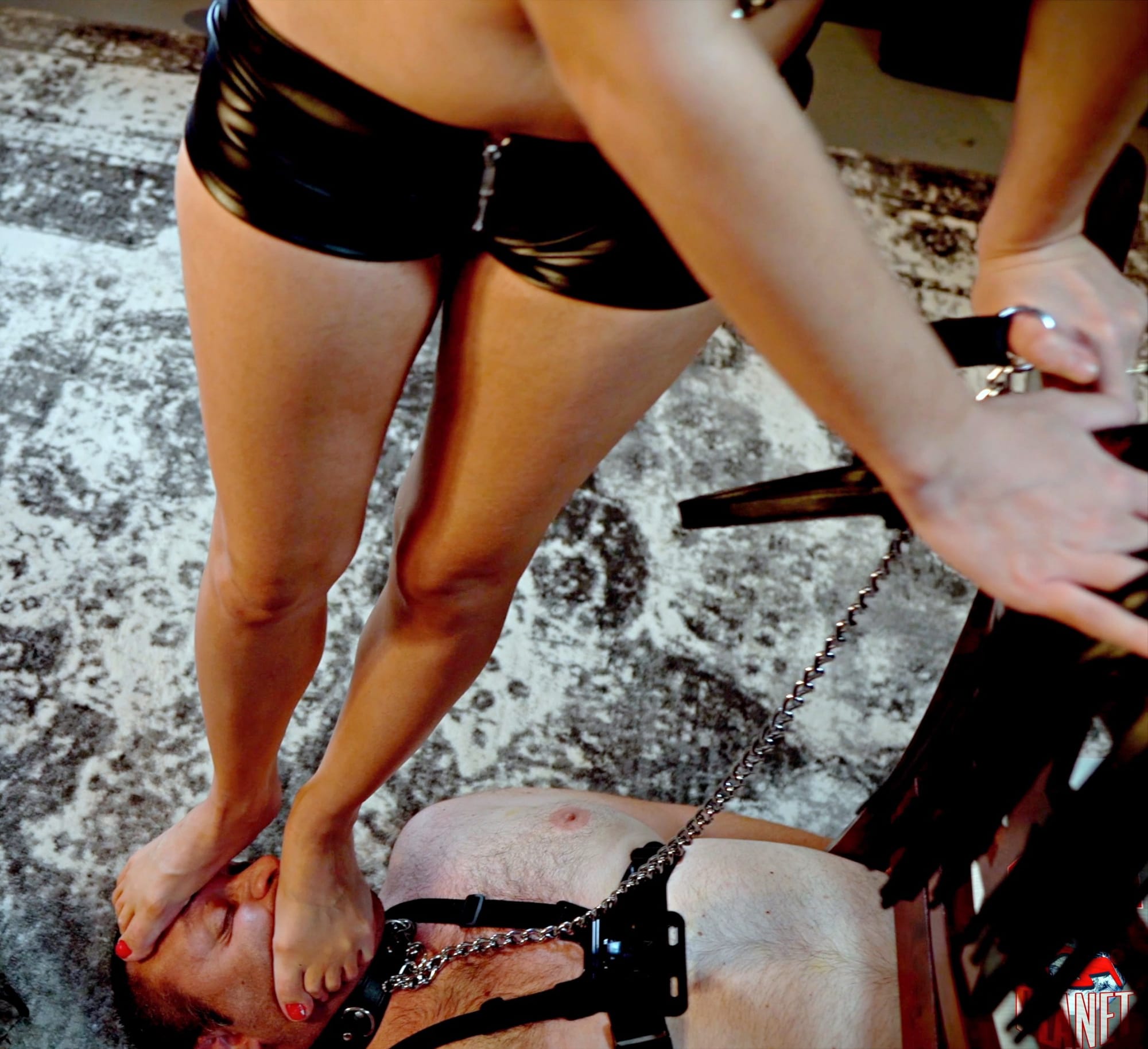
Cultural Semiotics of Kneeling, Feet, and Power
The image of a kneeling figure at another’s feet carries powerful symbolism across cultures and eras. In many traditions, prostration or foot-cleaning signifies ultimate submission and reverence, which the fetish world has eroticized.
Religious and Mythic Footstools. Across world religions, being trampled or lowered to someone’s feet usually means lowliness and service. For example, Biblical passages often describe enemies of a divine king being made a “footstool” beneath his feet, symbolizing complete defeat. A devotional website explains that a footstool is “a place of inferiority” – “far inferior” to the one who places their feet upon it. The act of worshipping at a deity’s feet in scripture was meant to show total humility (e.g. holy men falling on their faces before God). Similarly, bowing down or kneeling is “a universal symbol of honor, reverence, and surrender.” In Catholic and Orthodox rites, a priest or nun will kiss a bishop’s ring or foot to signify obedience – an image not far from a footslave kissing a Mistress’s toe. These symbols carried a sharp contrast: in religious iconography, a footstool is not a comfy throne but a reminder of one’s weakness relative to divine power. Foot washing (e.g. Jesus washing disciples’ feet) inverted this, but still highlighted feet as a locus of humility and service. Fetish culture taps directly into this: making the sub a footstool re-enacts a mythic power exchange – the submissive literally is the Mistress’s conquered territory, her thing to sit or step on.
Art and Mythological Imagery. Artists have long toyed with the foot-as-power symbol. In Baroque paintings, there are scenes of Mercury or other gods trampled by goddesses, representing conquest. One famous mythical scenario, the story of Phyllis and Aristotle above, became popular Renaissance art: engraved prints show Aristotle crawling while Phyllis rides him. These classical images underlined the subversive shock of a woman literally above a man. In the 20th century, artists like Allen Jones made this literal: his 1969 sculptures Hatstand, Table and Chair depict nude dominatrices serving as furniture. These works caused feminist outrage in their day for objectifying women, but fetish communities saw them as iconic. Similarly, the Japanese dominatrix art of Namio Harukawa, mentioned earlier, extends the motif – voluptuous women literally mount and use men as footstools in his prints. Even popular culture nods to this: Stanley Kubrick’s A Clockwork Orange features tables shaped like naked reclining women, and modern art often uses foot-worship imagery to provoke discussion.
Symbolism of Kneeling and Dirty Feet. Many cultures also consider feet to be “dirty” or lowly parts of the body. Thus being asked to kiss or lick feet is humbling on a visceral level. Phrases like “crawling on hands and knees” or being a “doormat” directly evoke utter submission. A popular BDSM mantra comes to mind: “Her will, her feet, and his mouth.” Subservience to feet in ritual functions as a talismanic inversion: the sub proclaims “I am beneath you in body and spirit”. In art and literature, the figure who holds someone else’s feet commands ultimate authority; in many mythic traditions, the foot represents the final point of control. In short, when a Domme places a slave underfoot, she is re-enacting these deep symbols – and heightening arousal by tapping into humanity’s oldest stories of subjugation and devotion.
Themes from Classic Femdom Literature
To understand trampling and furniture-play in practice, it helps to look at foundational Femdom guides. Though we won’t quote directly from them, we can paraphrase their ethos.
Owning and Training a Male Slave (Bellemare). Ingrid Bellemare’s manual (a staple from the 1990s) paints submission as a total lifestyle. The male slave exists to serve every whim of his Mistress – from daily chores to ritual worship. Bellemare’s chapters illustrate a world where every moment is structured. Common motifs include strict posture rules (“kneel at Her feet unless allowed otherwise”), body worship (“massaging and kissing Her feet, giving effusive praise”), and demerit systems (“infractions lead to new punishments or added chores”). Importantly, Bellemare’s tone is fierce but instructive: service is the slave’s honor, and degradation a moral exercise. For example, a slave’s “essence” may be said to purify by communing with Her feet; his humility is framed as spiritual. Tasks like polishing boots, crawling to serve drinks, or even being tied as a footstool are treated as sacred rites – ritual humiliation reinforcing his obedience. In paraphrase: Bellemare insists that “the slave should do everything to please My feet, from washing them to holding a pose as furniture,” and that breaking these rules justifies intense corrective measures (verbal or physical) in service of Her pleasure.
Uniquely Rika (Rika). In contrast to Bellemare’s strict rulebook, Rika’s Uniquely Rika focuses on the emotional journey of submission. Though less fetish-explicit, the core theme is service as fulfillment. Rika writes as a Mistress explaining that the deepest power exchange is not in role-play but in soul-level devotion. She emphasizes everyday rituals: a submissive might find meaning in the simple act of reclining at his Domme’s feet after a long day, offering a foot massage, or keeping her slippers polished. The “ritual humiliation” here is softer: it’s about accepting the role of servant willingly and finding joy in it. Rika’s unique angle is that submission “feels good because it’s real,” and she suggests that a slave’s mind can enter a sort of meditative state through gentle, reverent service (such as foot massage, grooming, worship). In practice, her teachings mean a slave is encouraged to craft little ceremonies: for example, kneeling at her bedside each morning to greet her feet, or reciting a vow of obedience that might even include kissing Her feet for luck. Although Rika’s book is more psychological than fetish-heavy, it underlines an aesthetic: being beneath Her feet is depicted as a beautiful, fulfilling gift the slave gives Her, which in turn brings him pride in his humility.
The Dominant Wife Rulebook (Mistress Jessica). Mistress Jessica’s Rulebook offers a pragmatic guide for wives to impose D/s on husbands. It’s structured as a list of customizable rules – think “game of consequence.” Many of Jessica’s example rules target the husband’s movement and posture: always approaching Her from behind, never looking Her in the eye unless spoken to, and indeed – kneeling whenever Her feet enter the room. The Rulebook emphasizes constant awareness: the husband lives in a state of alert service. Specific rules might include “The husband will massage the wife’s feet every evening before dessert,” or “If you swear, drop and kiss Her foot as penance.” The tone is firm but playful: each rule reinforces that he is “property” to be managed. This reflects a key theme from these texts: the moral aesthetic of being beneath Her. The submissive’s humiliation isn’t just punishment; it’s sanctified as a mark of his commitment. By carefully choreographing humiliation (foot-kissing, public refusal of personal wants, being punished through foot-trampling for failures), these guides create a sense of ceremony. The slave is reminded constantly that his “righteous” place is on the floor. In short, Jessica’s rulebook treats foot service as pageantry – an owner’s manual for weaving Her domination into every action, large and small.
In all these works, two ideas recur: the servant’s identity is defined by service, and her feet symbolize the ultimate moral center. Submissive characters or readers are taught that serving at Her feet (massaging them, kissing them, holding them high to put on socks, etc.) is a privilege that ennobles them. And ritualized humiliation – whether a formal ritual or playful rule – is the tool that keeps the power imbalance sacred. By following the authors’ instructions, a male slave is not “just a man who likes feet”; he is, in their words, elevated by embracing his low position. This combination of strict ritual and reverence creates the forbidding yet alluring Femdom atmosphere we see dramatized in DominaPlanet’s scenes: it’s service and worship rolled into one.

Contemporary Scenes and Rituals Today
Today’s foot domination scenes, whether in film, club play, or custom video content, draw directly on this history and psychology – and DominaPlanet’s catalog is full of examples. A typical trampling or furniture scene has formal elements: the Mistress dresses in commanding attire (boots, stilettos, or bare feet), and the male slave enters ritualistically (often blindfolded or leash-bound). He is instructed to prostrate himself – perhaps on a cushion at her feet – and may begin with foot worship (massaging, kissing). Then, step by step, the humiliation escalates.
For example, one popular scenario might proceed: (1) The slave kneels before Her and bathes Her feet, proving devotion. (2) She orders him to become furniture – perhaps she sits on him as a “human chair” or stands with one foot on his back as he lies prone. (3) She may then walk or dance on him in heels, “stamping out” his ego. (4) Throughout, she verbalizes his inferiority: reminding him he exists for her pleasure, calling him “doormat” or “slave”. If he hesitates or disobeys, she might punish him by adding weight (standing two-footed on his chest) or by forbidding him to touch Her feet thereafter. (5) Finally, once her dominance is demonstrated, she often ends the scene with nurturing aftercare: allowing the exhausted slave to worship her feet to make amends, or stroking his hair while he comforts at her toes.
Psychologically, these scenes tap the patterns we discussed: the slave initially braces for intimidation, then collapses into subspace as adrenaline fades and a kind of bliss takes over. Behind the scenes (or in the editorial notes), Domme narrators often remark on the sub’s visible transformation – his face slackening, breathing deepening – when she relaxes pressure or rewards him. Contemporary practitioners encourage slaves to journal those sensations of transcendence underfoot, reinforcing the idea that being a footstool
is healing and satisfying for the right mind.
DominaPlanet’s own videos follow suit. You might see a dominatrix whispering a mantra to her kneeling slave (“Worship Her feet, serve Her always…”) as she loosens his collar and orders, “Now crawl under the chair.” In another clip, a Mistress may instruct multiple slaves to take fixed positions: one as her footstool, another as an end table. She then paces above them, occasionally stamping. These productions highlight “ritual humiliation” – from formal foot-kissing ceremonies to playful insults – all choreographed to maximize the aesthetic of submission.
In summary, the contemporary enactment of trampling and furniture-play is a blend of tradition and innovation. It honors the lineage of onna-sado and leather subculture while also embracing the psychology we now understand. Modern scenes pay careful attention to consent and safety (we often see the Domme checking in, using positional knowledge as described by experts). Yet, stylistically, they aim to recreate that classic image: the powerful woman above, and the worshipful man below, every act reinforcing that she is queen, his place is as footstool.
Featured Clips (curated examples)
Professional, SEO-clean summaries you can paste into the article with full URLs:
- Standing On Your Head (HD 4K MP4)
https://www.clips4sale.com/studio/130815/23758387/standing-on-your-head-hd-4k-mp4
A pure trampling control study: the Domme uses the head/face as a literal threshold and balance point, reinforcing stillness, counting, and correction. High-resolution close-ups of placement and command presence. - Dirty Foot Cleaning Hole (HD 4K MP4)
https://www.clips4sale.com/studio/130815/27805017/dirty-foot-cleaning-hole-hd-4k-mp4
Human fixture / furniture play taken to its logical extreme: the submissive’s head becomes a built-in cleaning station for soles fresh from use. Emphasis on immobility, scent dominance, and task obedience. - Our Foot Cleaning Gimp (HD 1080P MP4)
https://www.clips4sale.com/studio/130815/26420903/our-foot-cleaning-gimp-hd-1080p-mp4
A two-Domme containment scene—caged presentation, controlled releases, and alternating demands that keep the sub underfoot. Strong focus on role rotation (trampling, face use, foot-in-face fixation). - Beat And Eat From My Feet (HD 4K MP4)
https://www.clips4sale.com/studio/130815/26293401/beat-and-eat-from-my-feet-hd-4k-mp4
Foot-centric tease/deny/reward protocol where the Domme’s soles are both the instrument of control and the focus of attention. Editorial note: highlights obedience to instructions, edging discipline, and post-scene protocol.
Sources
- Martin, L. “Boot fetishism.” Wikipedia, June 2025.
- Trampling (sexual practice). Wikipedia, 2025.
- Voss, K. “Human Furniture.” Wikipedia, 2023.
- Heath, C. “BDSM: A Beginner’s Guide to Subspace.” Healthline, 2024.
- Brame, G. “Why Kink Makes Your Brain Happy.” Psychology Today.
- Linden, D. “The Neurobiology of BDSM Sexual Practice.” Psychology Today.
- “Foot Fetishism.” Wikipedia, 2025.
- McCartney, K. “Bowing and Kneeling in Worship.” RelentlessPursuitCreative.org.
- “Footstool in the Bible.” GotQuestions.org.
- O Nomis, A. The History and Arts of the Dominatrix (2007).
- Uniquely Rika (Rika, 2008) and The Dominant Wife Rulebook (Mistress Jessica, 2012).
- DominaPlanet video catalog (current).